Haas, the Other American Team
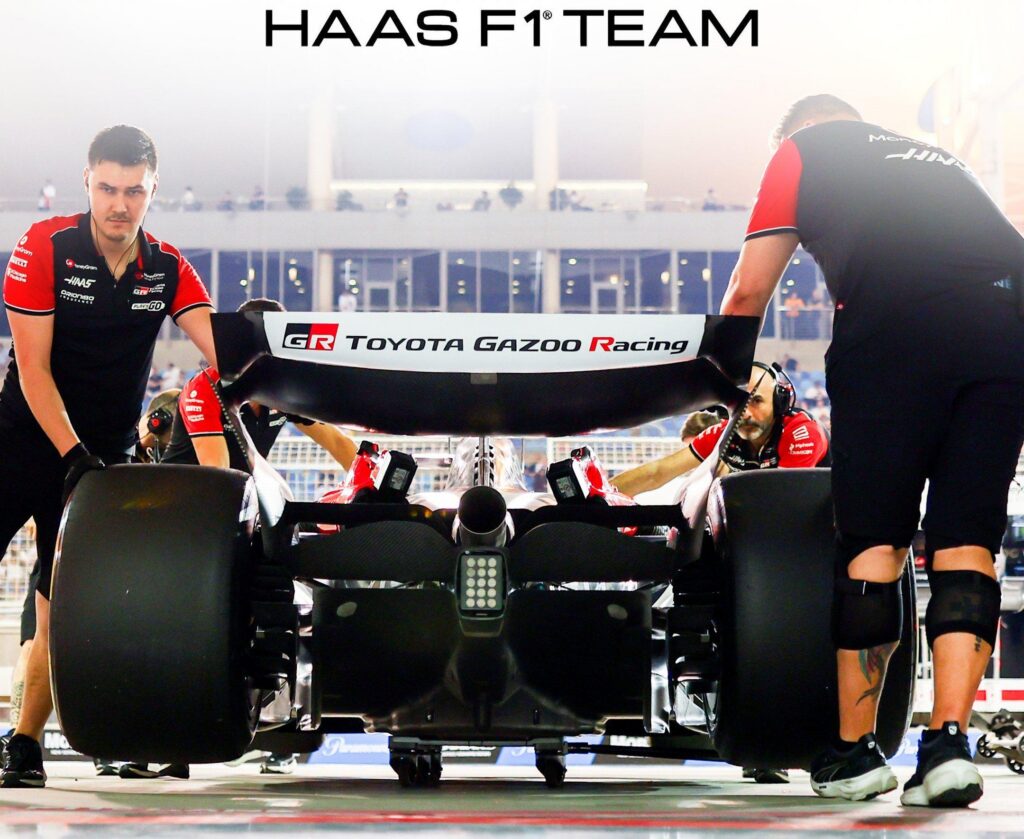
With Cadillac’s splashy arrival in Formula One this year, it would be easy to forget that America already had a team on the grid.
In fact, Haas has been carrying the American flag in Formula One since 2016. Founded by California industrialist and NASCAR team owner Gene Haas, the organization became the first American-led F1 team to compete in three decades. Its official base remains in Kannapolis, North Carolina, and Formula One does list Haas as an American constructor.
Of course, calling Haas purely American requires a small asterisk *
From the beginning, Haas adopted an unusual international business model. Ferrari supplied the engines, gearboxes and technical assistance, while Italian race-car manufacturer Dallara helped construct the chassis. Haas also established a European operation in Britain. Today the organization maintains facilities in the United States, United Kingdom and Italy, still uses Ferrari power, and has added Japan’s Toyota Gazoo Racing as both a technical partner and, beginning this season, title sponsor.
So yes, Haas is American. It just takes a small international coalition to make the thing go around the track.
And for a while, it went surprisingly well.
Romain Grosjean finished sixth in Haas’ very first Grand Prix in Australia in 2016 and fifth two weeks later in Bahrain. The team finished eighth in the Constructors’ Championship in each of its first two seasons before enjoying its breakthrough year in 2018, finishing fifth — still the best championship result in Haas history.
Then things became considerably harder.
Haas slipped to ninth in 2019 and 2020 and endured a miserable and pointless, in the literal sense, 2021 season, having essentially sacrificed that year’s car to concentrate resources on the coming new regulations. Kevin Magnussen’s surprise return in 2022 brought an immediate fifth-place finish in Bahrain and later Haas’ first pole position in Brazil, but the recovery didn’t last. By 2023, the team was back at the bottom of the Constructors’ standings.
That led to perhaps the most important change in recent Haas history.
Longtime team principal, and colorful character, Guenther Steiner departed before the 2024 season and was replaced by engineer Ayao Komatsu, who had been with Haas since its first race. Under Komatsu, the team immediately improved to seventh in 2024 with 58 points. Haas scored even more — 79 points — in 2025, although an unusually competitive midfield dropped it to eighth in the championship. Rookie Ollie Bearman also delivered a fourth-place finish in Mexico, matching the best race result in team history.
The 2026 Report Card
Midseason Grade: B-
Haas began Formula One’s new regulatory era looking like one of its biggest surprises.
Bearman finished seventh in Australia and an excellent fifth in China, helping Haas score points in five of the opening six rounds. For a brief period, the team even sat fourth in the Constructors’ standings.
Unfortunately, the semester started with straight A’s and has recently developed a disturbing number of incomplete assignments.
Through Hungary, Haas sits seventh with 21 points. Bearman has scored 18 of them while Esteban Ocon has contributed three. More concerning, Haas has failed to score in the last five Grands Prix.
The drivers say the VF-26 has been frustratingly inconsistent. Ocon has described unexpected losses in straight-line speed and downforce, while both drivers have reported differences in parts and car behavior from one session or weekend to another. Bearman went so far as to say the drivers have occasionally felt as though they were competing with their hands tied behind their backs.
That’s why a B- feels appropriate.
Haas deserves considerable credit for interpreting the new 2026 regulations well enough to score immediately and currently sits ahead of Audi, Williams, Aston Martin and Cadillac. But seventh is somewhat misleading: Haas has 21 points while fifth-place Racing Bulls has 66, so the gap to the front of the midfield has become substantial.
There are reasons for optimism.
Bearman increasingly looks like a driver around whom Haas can build, while the growing Toyota relationship gives the team resources it historically lacked. Toyota is helping with driver and personnel development and a new simulator at Haas’ Banbury facility, while Ferrari continues supplying the power unit.
That arrangement also neatly summarizes modern Haas.
American owner. American headquarters. Japanese technical partner. Italian engine. British driver. French driver. Japanese team principal.
Welcome to Formula One.
Haas probably isn’t about to become America’s answer to Ferrari. Its smaller, deliberately efficient structure makes regular victories and championship contention an enormous leap from where it stands today.
But Haas has survived eleven seasons in a sport that routinely consumes ambitious teams, and under Komatsu it appears to be becoming a smarter, more technically disciplined organization. The immediate challenge is not beating Mercedes or Ferrari. It is fixing the VF-26’s inconsistency and proving that the strong opening races weren’t a mirage.
Cadillac may be the glamorous new American arrival with General Motors behind it and grand plans for its own engine.
Haas is something different.
It is the other American team — the one that’s already been here for ten years.
And for now, at least, the scoreboard still says Haas is America’s best Formula One team.